

Aluminum Alloy Die Casting OEM Customization: Quality Control Guide from DFM Evaluation to Mass Production
This article analyzes the key DFM design points and core quality control elements for mass production in the make-to-drawing/OEM customization of aluminum alloy die castings. It covers collaborative mould design, dimensional accuracy, internal porosity control, and post-processing specifications, helping procurement and engineering personnel make efficient selections.
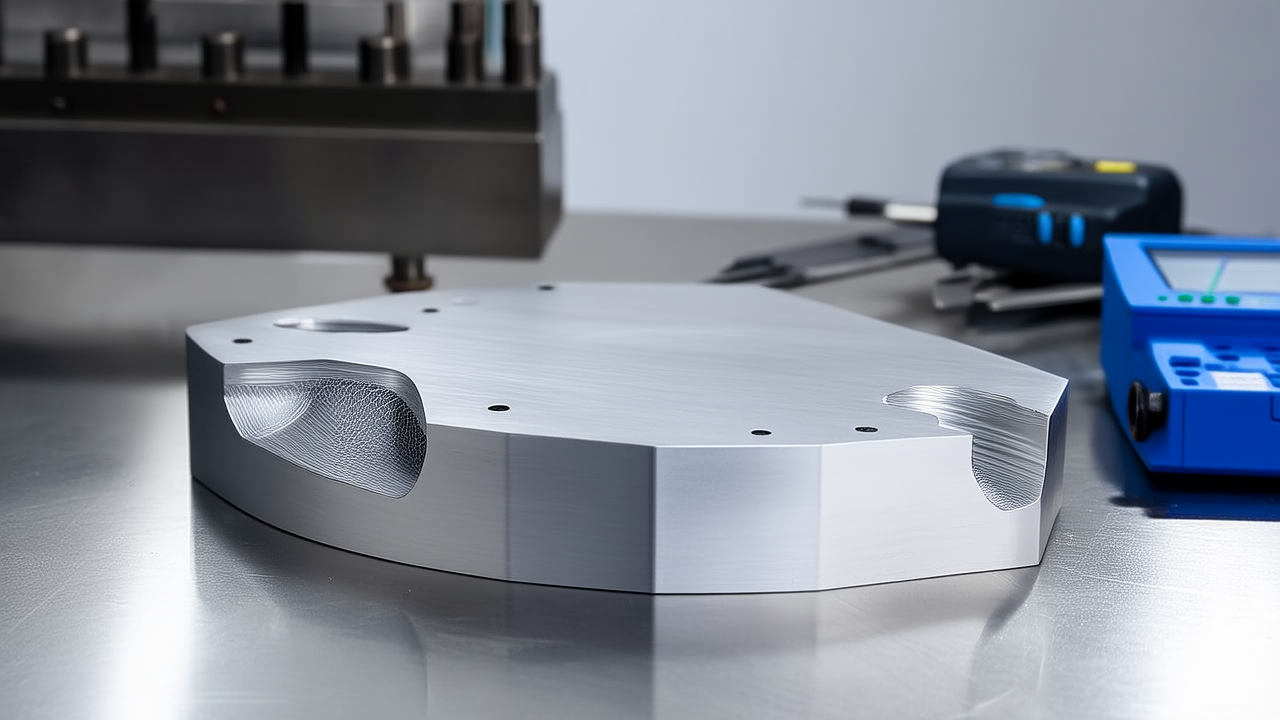
High-quality make-to-drawing/OEM customization of aluminum alloy die castings hinges on early-stage DFM (Design for Manufacturability) collaborative evaluation and closed-loop control of the entire die casting process chain.
I. DFM Collaborative Design: Bridging the Gap Between Drawings and Mass Production
When undertaking custom machining for complex structural parts such as reducer housings and cantilever assemblies, early-stage DFM evaluation is crucial for avoiding mass production risks.
- Structural manufacturability review: Product design should avoid deep cavities and narrow gaps, with a recommended draft angle of ≥1°; wall thickness must remain uniform (generally 2-5mm), avoiding abrupt changes in thickness to fundamentally reduce the risk of shrinkage cavities and deformation.
- Mould collaborative design: The parting surface layout should prioritize flat parting to minimize flash; the gating system must ensure "stable, uniform, and fast" filling of the molten metal; overflow wells should be precisely positioned in air trap areas (such as corners and ends of ribs), with a volume typically set at 5%-10% of the die casting volume to effectively accommodate cold, dirty metal and gas.
II. Die Casting Molding Process: Parameter Control Determines Intrinsic Quality
The molding process of aluminum alloy die casting imposes extremely stringent requirements on temperature and pressure control, directly determining the density of the housing.
- Melting and refining: Raw materials must be baked to remove moisture, and the melting temperature controlled at 700-750°C. During the process, refining agents must be added for degassing and slag removal, followed by standing and skimming to ensure the purity of the molten aluminum.
- Injection and temperature control: The injection process is divided into three stages: slow shot (to avoid air entrainment), fast shot (to create a turbulent-to-laminar flow transition of the molten metal in the mould cavity, with filling time controlled at 0.1-0.3s), and intensification (pressure increased to 80-120MPa, holding pressure for 5-15s to densify the casting). Meanwhile, the mould temperature must be stabilized at 180-250°C via a mould temperature controller to ensure molding stability.
III. Core Quality Control Indicators: Precision, Density, and Mechanical Properties
When evaluating critical components such as electromechanical housings and flanges, purchasers need to focus on the following hard indicators:
- Dimensional accuracy and geometric tolerances: High-end applications require critical dimensional accuracy to be controlled at the CT4-CT5 level, and geometric tolerances (such as flatness and coaxiality) must be within 0.05mm to ensure smooth assembly and stable operation.
- Internal quality and porosity: Pores and shrinkage porosity will severely affect the mechanical properties and sealing performance of parts. The porosity in critical areas of high-quality die castings should be less than 1%, with no concentrated shrinkage cavities, which is a core threshold for components that need to withstand alternating loads or meet airtightness requirements.
- Mechanical properties: Through optimized processes and heat treatment, the tensile strength of commonly used aluminum alloys can reach over 320MPa, with an elongation of more than 3.5%, ensuring structural strength while achieving lightweighting.
IV. Post-processing and Closed-loop Delivery: Ensuring End-use Reliability
The post-processing and cleaning processes of die castings are equally important and directly relate to the product's appearance and long-term environmental adaptability.
- Surface cleaning and defect prevention: If black spots appear on the surface of die-cast aluminum, it is mostly due to carbonized residues of the release agent or secondary oxidation caused by overly alkaline cleaning agents. Ultrasonic cleaning must be used, followed by thorough rinsing and timely drying to maintain surface cleanliness and uniform color.
- Customized post-processing: Providing custom machining services such as sandblasting, powder coating, and impregnation according to application scenarios. For example, impregnation treatment can effectively seal micro-pores and improve the high-pressure sealing performance of components such as end caps; powder coating and sandblasting significantly enhance surface corrosion resistance.
- One-stop closed-loop advantage: Choosing a supplier with full-chain capabilities from mould development, die casting, precision machining to surface treatment can unify the entire process benchmarks, avoiding dimensional deviations and delivery delays caused by splitting among multiple suppliers, ensuring efficient delivery of make-to-drawing/OEM projects.